


 Courses
About the Course
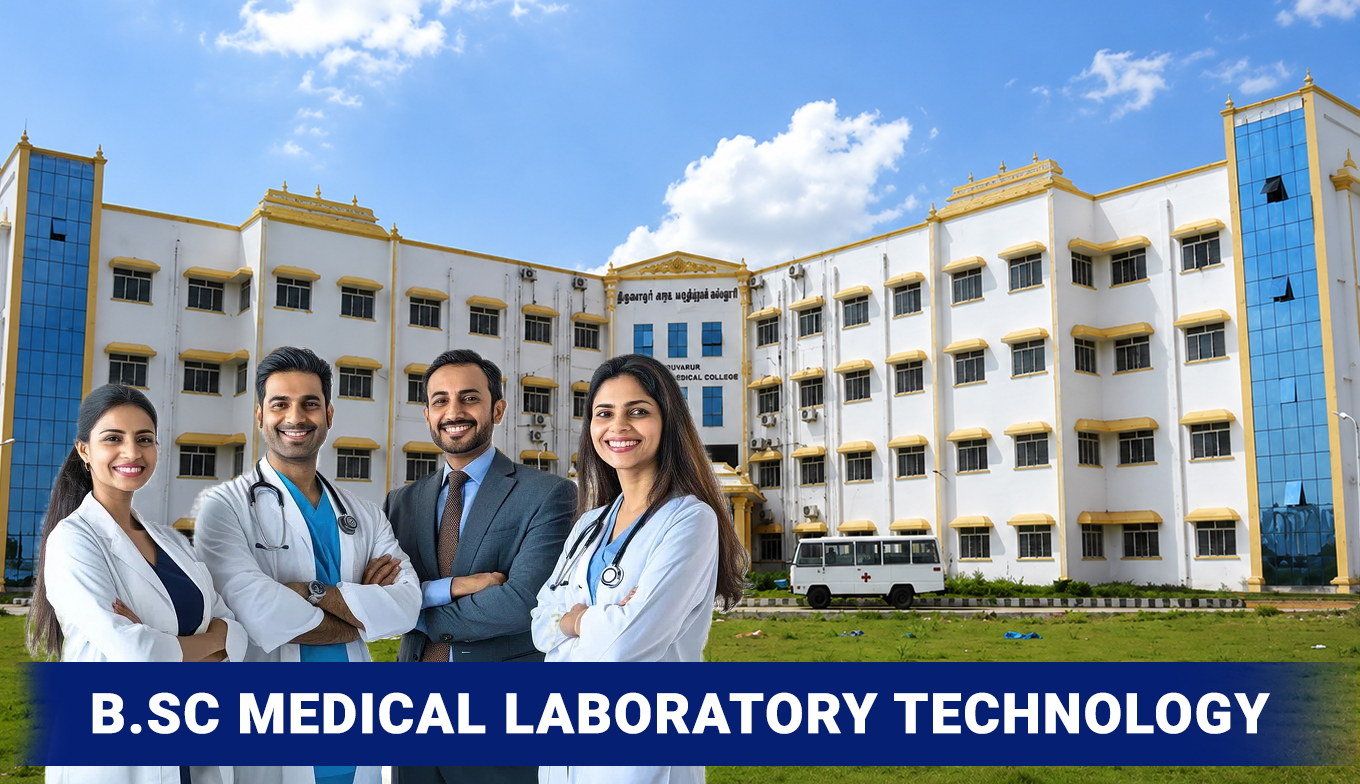
Government Thiruvarur Medical College offers the B.Sc Medical Laboratory Technology programme designed to develop highly skilled laboratory professionals capable of supporting modern healthcare systems through accurate diagnostic testing, laboratory analysis, disease identification, and clinical investigation procedures. The programme provides comprehensive education in laboratory sciences, diagnostic technologies, healthcare ethics, and clinical laboratory management.
B.Sc Medical Laboratory Technology focuses on the scientific analysis of blood, body fluids, tissues, and other clinical samples essential for disease diagnosis, treatment planning, and patient monitoring. The programme combines theoretical knowledge, laboratory training, practical healthcare exposure, and research-oriented learning to prepare students for advanced diagnostic healthcare services.
Students receive extensive practical exposure through
- Clinical laboratory training
- Diagnostic procedure analysis
- Sample collection and processing
- Biochemical and microbiological testing
- Hematology and pathology laboratory work
- Hospital laboratory postings
- Research laboratory exposure
- Quality control and laboratory safety training
The programme develops expertise in
- Clinical biochemistry
- Hematology
- Microbiology
- Histopathology
- Immunology
- Blood banking techniques
- Diagnostic laboratory procedures
- Laboratory instrumentation and automation
About the Curriculum
The curriculum for B.Sc Medical Laboratory Technology is structured according to university regulations and modern healthcare industry requirements. The programme follows a practical-oriented academic system focused on laboratory competency, diagnostic accuracy, scientific analysis, and professional healthcare skills.
The curriculum includes:
- Human Anatomy and Physiology
- Biochemistry
- Pathology
- Microbiology
- Hematology
- Clinical Biochemistry
- Histopathology Techniques
- Immunology and Serology
- Blood Banking and Transfusion Technology
- Clinical Laboratory Management
- Diagnostic Instrumentation
- Research Methodology
- Healthcare Ethics and Safety
The academic structure emphasizes:
- Practical laboratory training
- Clinical diagnostic exposure
- Instrument handling and calibration
- Sample analysis techniques
- Quality assurance procedures
- Hospital-based laboratory postings
- Research and project work
- Continuous practical assessments
Eligibility Criteria
- Successful completion of Higher Secondary Education (10+2) or equivalent
- Physics, Chemistry, Biology/Botany & Zoology as core subjects
- Minimum qualifying marks as prescribed by the institution and university
- Compliance with admission regulations and eligibility norms
Admission Process
- Submission of application forms
- Academic merit evaluation
- Certificate verification
- Eligibility confirmation
- Fee payment and admission confirmation
Course Duration
The B.Sc Medical Laboratory Technology programme has a duration of 3 to 4 years including academic study, practical laboratory training, hospital postings, and internship exposure as prescribed by the affiliating university and healthcare education guidelines.
- Theoretical academic learning
- Laboratory practical training
- Clinical diagnostic exposure
- Hospital-based practical sessions
- Research-oriented learning
- Internship and skill development training
Internship Structure
- Clinical laboratory rotations
- Hematology and pathology laboratory exposure
- Biochemistry and microbiology testing
- Blood bank and transfusion services
- Sample collection and processing
- Diagnostic equipment handling
- Laboratory quality control procedures
- Healthcare safety and infection control practices
Career Opportunities
- Medical Laboratory Technologist
- Clinical Laboratory Technician
- Pathology Laboratory Specialist
- Microbiology Laboratory Technician
- Blood Bank Technologist
- Diagnostic Laboratory Executive
- Research Laboratory Assistant
- Healthcare Quality Control Analyst
- Laboratory Supervisor
- Medical Equipment and Diagnostic Specialist